Envirly by Quantifier & Bidfood: together for more sustainable food production.
Company profile
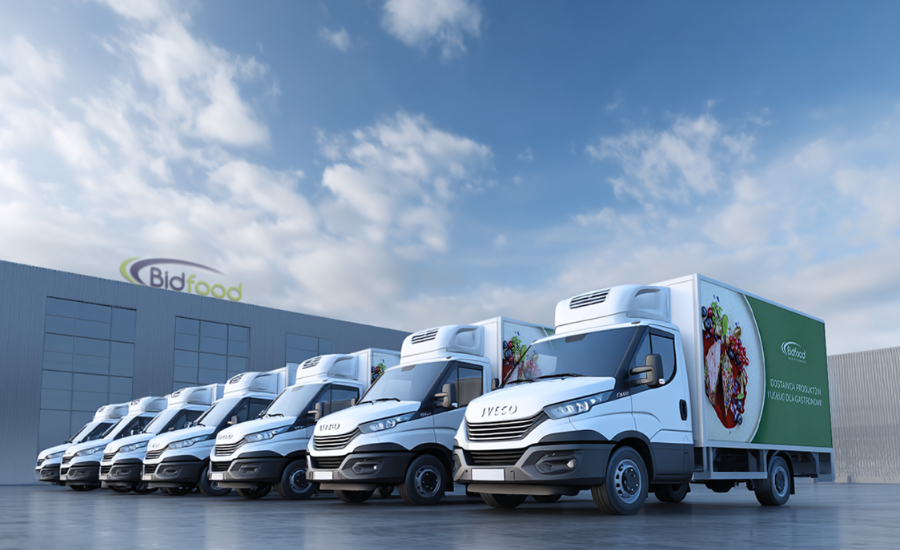
Bidfood is a nationwide company and a leading supplier of food and services for the HoReCa sector (hotels, restaurants, catering, etc.). With over 35 years of market presence, it offers customers a broad range of food and non-food products, supporting their growth through the Bidfood Academy training and education program. The company operates an extensive network of 26 branches across Poland and provides a modern online ordering platform, E-bidfood. As a responsible supplier in the HoReCa sector, Bidfood has long treated sustainability as an important part of its business strategy, viewing ESG as a real opportunity to drive positive change in the industry.
Number of employees: 1,500+Reporting year: 2025Year established: 1991
Reporting scopes
- Scope 1: Direct emissions
- Scope 2: Electricity
- Scope 3: Employee commuting and business travel
- Scope 3: Waste
- Scope 3: Leased assets
- Scope 3: Purchased goods and services

Results analysis
Introduction: About the company
Operating in the market for more than three decades, Bidfood is a leading Polish supplier of food and services for the HoReCa sector, with an extensive branch network across Poland. The company offers a broad portfolio of food and non-food products, supporting customers through the Bidfood Academy and the modern E-bidfood platform. Bidfood implements solutions that positively impact the environment, communities, and the market, seeing itself as a partner setting the direction for change in the industry. As a responsible supplier, it feels a particular responsibility for the market in which it operates, treating ESG not as a formal requirement but as a strategic growth opportunity. Through its collaboration with Envirly, Bidfood successfully implemented a comprehensive ESG reporting system, treating sustainability as a strategic competitive advantage in the foodservice sector.
“At Bidfood, we believe that good food means a good life. In gastronomy, we focus on high quality: products, services, and culinary inspiration.”
ESG motivations and goals
For Bidfood, sustainability is primarily an investment in the company’s future and aligns with its business philosophy. While regulations provided an additional impulse to take action in the area of sustainability, the company’s motivation from the outset ran much deeper. Bidfood wanted to initiate change, not merely react to regulations.
ESG activities deliver tangible business benefits: they increase credibility with customers, partners, and employees; enable more effective energy cost management; support logistics optimization; and facilitate participation in tenders where environmental considerations are becoming increasingly important. ESG is also a key element of building competitive advantage, because when selecting suppliers, customers increasingly favor more responsible companies.
Regulatory changes, including the Omnibus directive, have made ESG an even more strategic topic. Bidfood’s management recognizes that sustainability is not a temporary trend but a direction the entire economy is moving toward. Within the company, ESG is viewed as a growth opportunity, not only a legal obligation.
Implementation process and collaboration with Envirly
By decision of the management board, Bidfood established an interdisciplinary ESG team made up of representatives from key departments: finance, accounting, IT, HR, logistics, marketing, procurement, sales, customer service, and product trading safety. The team worked regularly with Envirly’s representatives, executing successive implementation stages in line with a previously agreed timeline. The process began with identifying areas for collecting environmental and social data. At an early stage, attention was also given to transparent communication with both employees and key business partners through surveys available on the Envirly platform.
Envirly experts organized a series of online training sessions for Bidfood employees and the management board. The goal was to introduce ESG topics and raise awareness that reporting is part of a broader change process, not merely a burdensome formality. The reporting process itself was managed by the project team, but data was collected across multiple departments, which required close cross-team collaboration.
Challenges and solutions
The biggest challenge proved to be the completeness and quality of collected data. Information was not initially available in one place or in a consistent format. New procedures also had to be implemented, along with intensive cross-department collaboration.
Another challenge was a shift in awareness: understanding that ESG is an ongoing process, not a one-time project. Clear communication and consistent educational efforts played a key role here.
The Envirly platform helped address these issues by enabling:
- organizing data and reporting it consistently,
- significantly reducing the time needed to prepare the report,
- avoiding many errors at the early stages of the project.
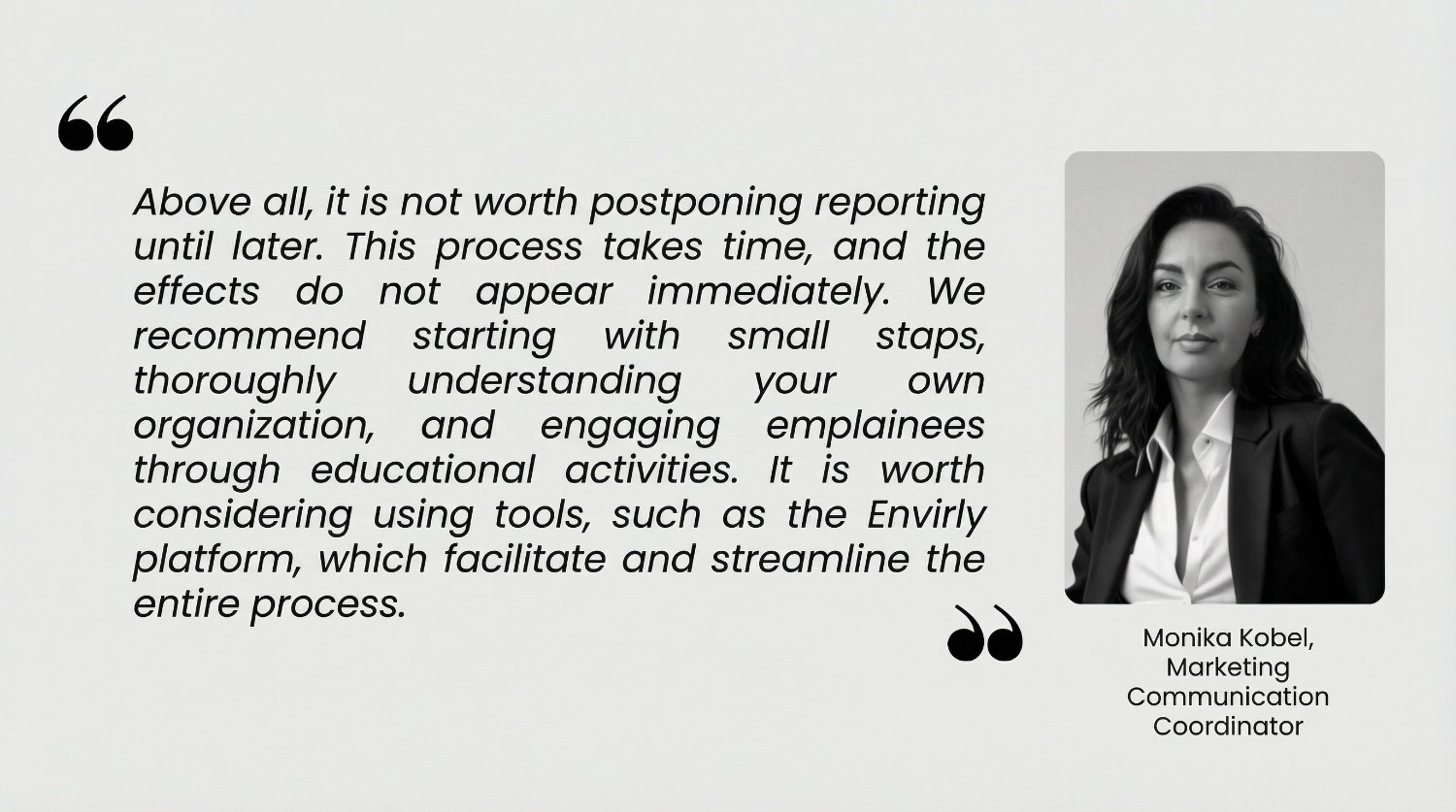
The implementation ran smoothly thanks to the professional support provided by the Envirly team.
Outcomes and recommendations
Thanks to its collaboration with Envirly, Bidfood:
- successfully implemented its first ESG reporting process,
- built internal sustainability capabilities,
- gained tools to minimize negative impacts and strengthen positive impacts on the environment, communities, and the market,
- got ahead of regulatory requirements by preparing for future reporting obligations.
Regulations postponed the reporting deadline by two years, giving Bidfood time for more thorough verification of the report. However, the company proactively used this time to build strong ESG foundations.
Collaboration with Envirly enabled Bidfood to achieve several key ESG objectives. The company successfully implemented a comprehensive sustainability reporting system, building an interdisciplinary ESG team without creating additional positions. Bidfood optimized the process of collecting and analyzing environmental and social data using the Envirly platform. The company is staying ahead of regulatory requirements by preparing today for future reporting obligations, even though the Omnibus regulations postponed the deadline by two years. Bidfood is actively building internal ESG expertise and treats sustainability as a strategic competitive advantage in the HoReCa sector, demonstrating that ESG can be a driver of positive change within an organization and across the entire foodservice industry.